Martyn: A Modern Script Font for Handmade Brands
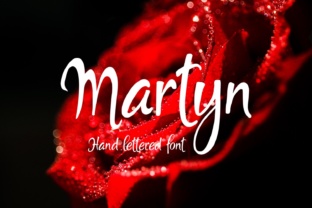
As someone who designs candle labels, wedding invites, printable planner pages, and SVG cut files for small-batch makers, I’ve learned that the right script font does more than look pretty—it builds trust, signals quality, and quietly tells your customer *who you are*. Martyn is one of those rare fonts that feels both intentional and effortless: a beautifully constructed script font with confident thick strokes and clean modern styling. It’s not fussy or overly ornate—just warm, legible, and full of quiet personality.
I reach for Martyn when I need elegance without fragility—think farmhouse welcome signs that hold up in natural light, boutique clothing tags that survive shipping folds, or greeting cards where every letter needs to land clearly at 12pt. Its generous stroke weight gives it serious presence on physical products, especially when printed or cut. Unlike delicate scripts that vanish on kraft paper or blur at small sizes, Martyn stays crisp even on ¾-inch sticker labels or heat-pressed tote bags.
For crafters using Cricut or Silhouette machines, Martyn cuts cleanly thanks to its open counters and well-spaced letterforms. I’ve used it successfully for vinyl wall art (36” wide), mini gift tags (1.5” x 1”), and layered acrylic sign kits—all without kerning adjustments or manual node editing. The thick strokes mean less risk of breakage on fine serifs or hairline connectors during cutting, which saves time and material. When prepping mockups for Etsy listings, Martyn also previews beautifully: no pixelation, no awkward spacing, just consistent rhythm across uppercase, lowercase, and punctuation.
Where Martyn shines brightest is in brand-critical touchpoints—product packaging, seasonal collections, and invitation suites. Imagine it on a soy wax candle label beside minimalist botanical line art, or as the “Welcome” header on a rustic wedding welcome board. It works equally well for playful birthday invitations (“Emma’s 5th Birthday Bash!”) and refined baby shower stationery (“Little One, We’re So Excited”). Because it’s designed as a display font—not meant for body text—I use it for names, titles, short phrases, and decorative accents. For longer copy, I pair it with a neutral sans serif like Montserrat or Poppins (clean, versatile, and widely available). That contrast—Martyn’s expressive flow against structured simplicity—creates visual hierarchy *and* brand cohesion.
Handmade sellers often ask: “Can I use this for my logo?” Yes—if your brand voice leans modern, approachable, and artisanal. Martyn has enough character to stand alone in a monogram or shop banner but avoids looking dated or overly formal. It’s also versatile across categories: I’ve seen it used on ceramic mug decals, embroidered patch layouts, digital download covers (planner bundles, habit trackers), and even chalkboard-style café menus printed on matte cardstock. Seasonal projects benefit too—swap out colors, not fonts: deep burgundy for fall harvest tags, seafoam green for spring garden party invites, charcoal gray for winter holiday packaging.
Readability matters—especially when your product lands in someone’s hands. Martyn’s letterforms avoid extreme flourishes or overlapping swashes, so “O”, “A”, and “S” remain distinct at smaller sizes. That means your customer can read “Small Batch • Hand-Poured • Made in Portland” clearly on a 2” product tag. No squinting. No confusion. Just warmth and clarity—exactly what handmade buyers respond to.
If you’re downloading Martyn from Script Amp, check the included file formats (OTF and TTF are standard, and both work flawlessly in Canva, Adobe Creative Cloud, and design software for cutting machines). Look for stylistic alternates and ligatures—they add subtle polish to words like “love”, “forever”, or “handmade” without overcomplicating your workflow. While Martyn isn’t billed as multilingual, its core Latin character set covers English, Spanish, French, and German diacritics commonly needed for boutique packaging and international Etsy shops.
Pairing Martyn thoughtfully expands its usefulness. Try it with a soft serif like Playfair Display for vintage-inspired wedding suites—or go ultra-minimal with Inter or Lato for modern apothecary branding. Avoid pairing it with other high-contrast scripts; two expressive fonts compete instead of complement. And if you're designing templates for resale (like editable Canva invitations or SVG bundles), Martyn’s commercial license covers physical products, digital downloads, client work, and merchandise—no extra fees or attribution required. That peace of mind matters when you’re scaling your shop and don’t want licensing surprises mid-launch.
What sets Martyn apart isn’t just how it looks—but how it *works*. It doesn’t demand special treatment. It doesn’t require hours of manual tweaking to function across mediums. It simply shows up: ready for your next candle label batch, your first Etsy wedding collection, your holiday market booth signage, or your best-selling printable planner cover. In a world where handmade buyers scroll fast and decide faster, Martyn helps your product stop them—not with noise, but with quiet confidence.
Whether you’re printing on recycled paper, cutting vinyl for mugs, layering digital elements for social graphics, or building a cohesive brand identity across stickers, tags, and web assets, Martyn delivers consistency without compromise. It’s the kind of premium font that feels like a trusted collaborator—not just another design asset.